Daily Panchangam and Spiritual Insights
Language: தமிழ் | English
Amavasai

Amavasai

அமாவாசை

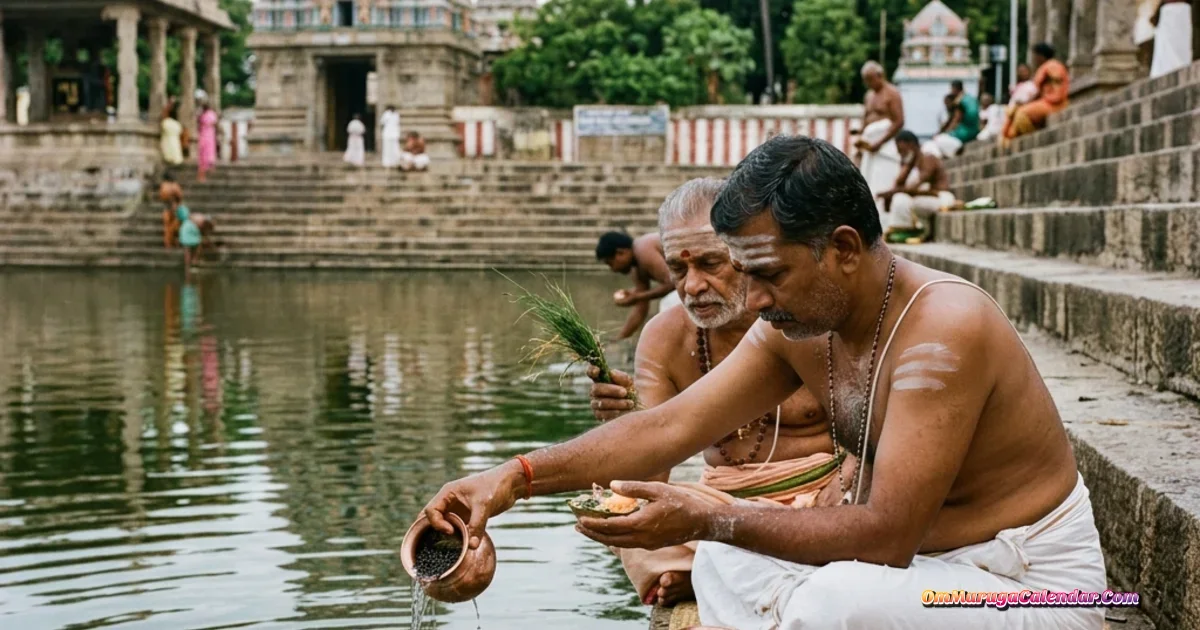
Amavasai is the highly sacred new moon day dedicated to expressing profound gratitude to our ancestors through Tarpanam, fasting, and feeding the needy.

Amavasai: 22 May 2039, 04.36 AM to 22 May 2039, 11.59 PM
In 4724 days 22-05-2039

Observance Dates & Timeline

Previous Amavasai from today
0 days ago
14 Jun 2026 View day
Next Amavasai from today
29 days to go
14 Jul 2026 View day

2039 Occurrences

Mon, 24 Jan 2039
Monday
2039
Kalayukti Thai 10
Amavasai Starts: 23 Jan 2039, 09.06 PM | Ends: 24 Jan 2039, 07.06 PM
Krishna Paksha Amavasya up to 07:06 PM IST Uttara Ashadha - Pada 2 up to 07:05 PM IST
06:39
18:19
Tue, 22 Feb 2039
Tuesday
2039
Kalayukti Masi 9
Amavasai Starts: 22 Feb 2039, 09.30 AM | Ends: 23 Feb 2039, 08.47 AM
Krishna Paksha Chaturdashi up to 09:30 AM IST Dhanishta - Pada 1 up to 02:51 AM IST (next day)
06:34
18:27
Thu, 24 Mar 2039
Thursday
2039
Kalayukti Panguni 10
Amavasai Starts: 23 Mar 2039, 10.50 PM | Ends: 24 Mar 2039, 11.29 PM
Krishna Paksha Amavasya up to 11:29 PM IST Purva Bhadrapada - Pada 4 up to 11:40 AM IST
06:19
18:28
Sat, 23 Apr 2039
Saturday
2039
Siddharthi Chithirai 9
Amavasai Starts: 22 Apr 2039, 01.14 PM | Ends: 23 Apr 2039, 03.04 PM
Krishna Paksha Amavasya up to 03:04 PM IST Ashwini - Pada 2 up to 12:19 AM IST (next day)
06:03
18:28
Sun, 22 May 2039
Sunday
2039
Siddharthi Vaikasi 7
Amavasai Starts: 22 May 2039, 04.36 AM | Ends: 22 May 2039, 11.59 PM
Krishna Paksha Amavasya up to 07:08 AM IST (next day) Bharani - Pada 4 up to 09:17 AM IST
05:55
18:32
Tue, 21 Jun 2039
Tuesday
2039
Siddharthi Aani 6
Amavasai Starts: 20 Jun 2039, 08.23 PM | Ends: 21 Jun 2039, 10.51 PM
Krishna Paksha Amavasya up to 10:51 PM IST Mrigashirsha - Pada 2 up to 12:35 AM IST (next day)
05:58
18:40
Thu, 21 Jul 2039
Thursday
2039
Siddharthi Aadi 5
Amavasai Starts: 20 Jul 2039, 11.46 AM | Ends: 21 Jul 2039, 01.24 PM
Krishna Paksha Amavasya up to 01:24 PM IST Punarvasu - Pada 4 up to 12:00 PM IST
06:05
18:42
Fri, 19 Aug 2039
Friday
2039
Siddharthi Avani 2
Amavasai Starts: 19 Aug 2039, 02.01 AM | Ends: 20 Aug 2039, 02.20 AM
Krishna Paksha Amavasya up to 02:20 AM IST (next day) Ashlesha - Pada 2 up to 10:00 PM IST
06:08
18:33
Sun, 18 Sep 2039
Sunday
2039
Siddharthi Purattasi 1
Amavasai Starts: 17 Sep 2039, 03.00 PM | Ends: 18 Sep 2039, 01.53 PM
Krishna Paksha Amavasya up to 01:53 PM IST Purva Phalguni - Pada 4 up to 06:27 AM IST
06:07
18:16
Mon, 17 Oct 2039
Monday
2039
Siddharthi Purattasi 30
Amavasai Starts: 17 Oct 2039, 03.00 AM | Ends: 18 Oct 2039, 12.39 AM
Krishna Paksha Amavasya up to 12:39 AM IST (next day) Hasta - Pada 3 up to 01:44 PM IST
06:06
17:59
Wed, 16 Nov 2039
Wednesday
2039
Siddharthi Aippasi 30
Amavasai Starts: 15 Nov 2039, 02.30 PM | Ends: 16 Nov 2039, 11.16 AM
Krishna Paksha Amavasya up to 11:16 AM IST Vishakha - Pada 2 up to 05:42 PM IST
06:12
17:52
Thu, 15 Dec 2039
Thursday
2039
Siddharthi Karthigai 29
Amavasai Starts: 15 Dec 2039, 01.44 AM | Ends: 15 Dec 2039, 10.02 PM
Krishna Paksha Amavasya up to 10:02 PM IST Jyeshtha - Pada 1 up to 11:23 PM IST
06:25
17:59

Times and tithi lines follow the site Panchangam engine for that civil day when data exists.

Spiritual Festival Sequence

Tamil Nadu Spiritual Experience

What is Amavasai?

Amavasai is the New Moon day in the traditional Hindu calendar, occurring when the moon is perfectly aligned between the Earth and the Sun, rendering it completely invisible in the night sky. Astrologically and spiritually, it is a day of profound introspection, considered highly potent for spiritual practices rather than beginning worldly, material ventures.

Instead of focusing on external gains, Amavasai directs human consciousness inward and backward—towards our deep roots, our lineage, and the unseen spiritual realms. It is a day specifically reserved for expressing eternal gratitude and reflecting on the impermanence of physical life.

Honoring Ancestors (Pitru Tarpanam)

The core purpose of observing Amavasai is to honor and pay heartfelt homage to one's ancestors (Pitrus). According to Hindu scriptures, on this dark night, the souls of the departed are permitted to visit the earthly realm to see their descendants. Performing 'Tarpanam'—a sacred ritual offering of black sesame seeds and water—is believed to quench their spiritual thirst and hunger.

Hinduism profoundly teaches that our current physical body, wealth, and knowledge are direct gifts from our lineage. Neglecting this fundamental duty of gratitude is believed to incur 'Pitru Dosha' (ancestral displeasure), bringing obstacles into one's life. Conversely, satisfying the ancestors on Amavasai ensures their protective blessings for the entire family's prosperity and peace.

Traditions in Tamil Nadu

In Tamil Nadu, the Amavasai days falling in the Tamil months of Thai (Jan-Feb), Aadi (Jul-Aug), and the Mahalaya Paksha (Sept-Oct) are considered supremely auspicious. On these specific days, millions of devotees gather at sacred water bodies like the ocean at Rameswaram, Kanyakumari, or riverbanks like the Amma Mandapam in Srirangam to perform rituals led by priests.

At home, families meticulously clean the house and prepare a grand vegetarian feast featuring the favorite dishes of their departed loved ones. This food is reverently offered on a banana leaf before God and the ancestors. A very crucial part of the tradition involves feeding crows before anyone in the family eats, as crows are symbolically considered the messengers of the ancestors.

Fasting and Annadanam

A strict dietary discipline is observed on Amavasai. Families completely abstain from non-vegetarian food, onions, and garlic. Those performing the Tarpanam typically maintain a strict fast, consuming absolutely nothing until the sacred offerings to the ancestors are fully completed.

Furthermore, performing 'Annadanam' (the donation of food) to the poor, orphans, or physically challenged individuals on Amavasai is considered one of the highest forms of Karma Yoga. Feeding the hungry on this day is said to directly please the ancestors and multiply one's spiritual merits manifold.

Internal Navigation

Related Festivals

Frequently Asked Questions

In Hindu mythology, crows are seen as the vehicles of Lord Yama (God of Death) and spiritual links to ancestors. When a crow eats the offered food, it signifies the ancestors have accepted the offering.

It is the culmination of a 15-day period dedicated entirely to ancestors. It is considered the most powerful day of the year to perform Tarpanam and seek forgiveness for unknown ancestral debts.

No. The person performing the Tarpanam must observe a strict fast, eating only after the rituals are properly concluded to maintain physical and mental purity.

While the physical Tarpanam ritual is traditionally performed by the male head of the family, women actively participate by fasting, preparing the sacred food, and offering heartfelt prayers to the lineage.