Bakrid
பக்ரீத் பண்டிகை
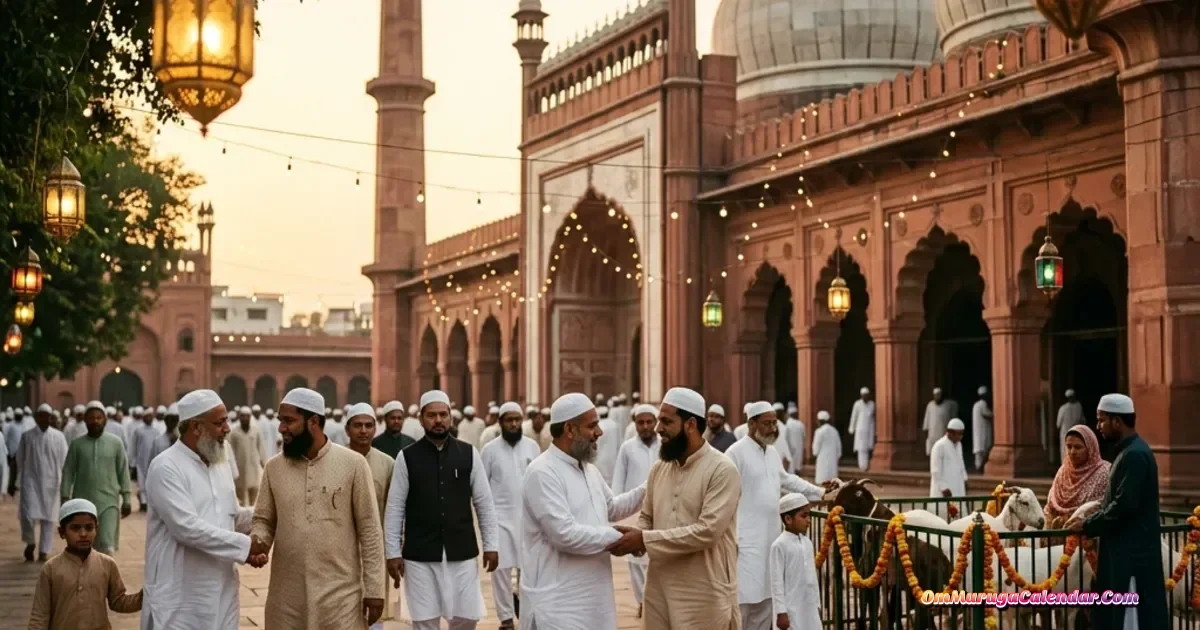
Bakrid, or Eid al-Adha, is the second major Islamic festival celebrated worldwide. Known as the 'Festival of Sacrifice,' it honors the immense willingness of Prophet Ibrahim (Abraham) to sacrifice his son as an act of obedience to God's command.
Primary date & Panchangam
Times and tithi lines follow the site Panchangam engine for that civil day when data exists.
Spiritual Festival Sequence
Tamil Nadu Spiritual Experience
History of Prophet Ibrahim's Sacrifice
The history of Bakrid is closely tied to Prophet Ibrahim. To test his faith, God commanded him in a dream to sacrifice his beloved son, Ismail.
Without hesitation, Ibrahim prepared to fulfill God's command. Pleased with his absolute devotion and willingness to sacrifice what he loved most, God replaced his son with a ram at the last moment.
This unparalleled act of faith and surrender to the divine will is commemorated every year during Bakrid.
The Philosophy of Qurbani
The most important ritual of Bakrid is 'Qurbani' (sacrifice), where Muslims sacrifice an animal such as a goat, sheep, cow, or camel.
The true philosophy of Qurbani is not merely shedding blood, but sacrificing one's inner ego, greed, and selfish desires for the sake of God.
Sharing the Meat
Islamic rules mandate that the sacrificed meat must not be kept entirely for oneself. It must be divided into three equal parts.
One part is given to the poor and needy, the second part to relatives and friends, and only the third part is kept for the family. This ensures that everyone in the community gets to eat a good meal.
The Hajj Pilgrimage
Bakrid coincides with the completion of 'Hajj', the holy pilgrimage to Mecca, which is one of the Five Pillars of Islam.
Millions of Muslims from all over the world gather in Saudi Arabia, wearing simple white garments (Ihram) to perform the pilgrimage, symbolizing ultimate equality before God.