Daily Panchangam and Spiritual Insights
Language: தமிழ் | English
Ekadasi

Ekadasi

ஏகாதசி

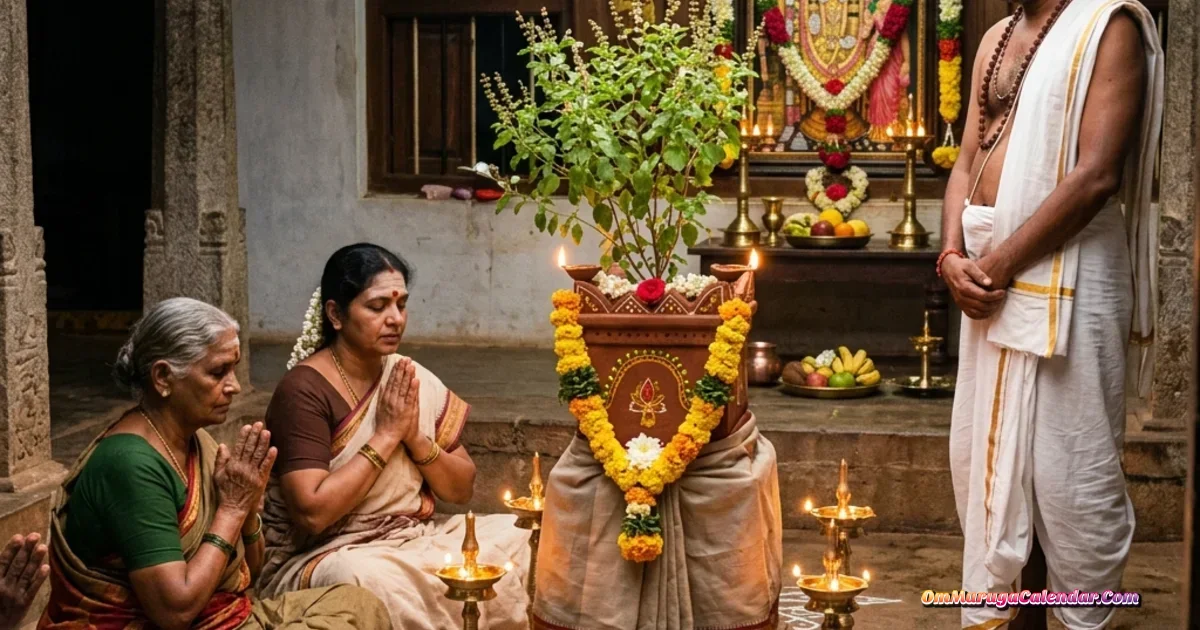
Ekadasi is the highly sacred 11th lunar day universally observed with rigorous fasting and deep devotion to Lord Vishnu to cleanse the body and soul.

Ekadasi: 21 Aug 1908, 04.56 PM to 22 Aug 1908, 06.48 PM
43031 days ago 22-08-1908

Observance Dates & Timeline

Previous Ekadasi from today
3 days ago
11 Jun 2026 View day
Next Ekadasi from today
10 days to go
25 Jun 2026 View day

1908 Occurrences

Tue, 14 Jan 1908
Tuesday
1908
Pilavanga Thai 1
Ekadasi Starts: 14 Jan 1908, 12.00 AM | Ends: 14 Jan 1908, 09.40 AM
Shukla Paksha Ekadashi up to 09:40 AM IST Rohini - Pada 1 up to 08:00 AM IST (next day)
06:38
18:14
Wed, 29 Jan 1908
Wednesday
1908
Pilavanga Thai 16
Ekadasi Starts: 29 Jan 1908, 12.00 AM | Ends: 30 Jan 1908, 03.37 AM
Krishna Paksha Ekadashi up to 03:37 AM IST (next day) Anuradha - Pada 4 up to 08:29 AM IST
06:40
18:21
Wed, 12 Feb 1908
Wednesday
1908
Pilavanga Thai 30
Ekadasi Starts: 12 Feb 1908, 01.39 AM | Ends: 13 Feb 1908, 04.04 AM
Shukla Paksha Ekadashi up to 04:04 AM IST (next day) Mrigashirsha - Pada 3 up to 04:45 PM IST
06:38
18:25
Fri, 28 Feb 1908
Friday
1908
Pilavanga Masi 16
Ekadasi Starts: 27 Feb 1908, 04.32 PM | Ends: 28 Feb 1908, 01.52 PM
Krishna Paksha Ekadashi up to 01:52 PM IST Purva Ashadha - Pada 4 up to 12:01 PM IST
06:33
18:27
Fri, 13 Mar 1908
Friday
1908
Pilavanga Masi 30
Ekadasi Starts: 12 Mar 1908, 08.59 PM | Ends: 13 Mar 1908, 11.42 PM
Shukla Paksha Ekadashi up to 11:42 PM IST Pushya - Pada 1 up to 08:46 AM IST (next day)
06:26
18:28
Sat, 28 Mar 1908
Saturday
1908
Pilavanga Panguni 15
Ekadasi Starts: 28 Mar 1908, 12.39 AM | Ends: 28 Mar 1908, 09.58 PM
Krishna Paksha Ekadashi up to 09:58 PM IST Shravana - Pada 3 up to 03:53 PM IST
06:17
18:28
Sun, 12 Apr 1908
Sunday
1908
Pilavanga Panguni 30
Ekadasi Starts: 11 Apr 1908, 04.23 PM | Ends: 12 Apr 1908, 06.37 PM
Shukla Paksha Ekadashi up to 06:37 PM IST Magha - Pada 2 up to 09:58 PM IST
06:09
18:27
Tue, 12 May 1908
Tuesday
1908
Keelaka Chithirai 30
Ekadasi Starts: 11 May 1908, 10.12 AM | Ends: 12 May 1908, 11.26 AM
Shukla Paksha Ekadashi up to 11:26 AM IST Uttara Phalguni - Pada 4 up to 10:26 AM IST
05:57
18:30
Tue, 26 May 1908
Tuesday
1908
Keelaka Vaikasi 13
Ekadasi Starts: 25 May 1908, 12.52 PM | Ends: 26 May 1908, 11.18 AM
Krishna Paksha Ekadashi up to 11:18 AM IST Revati - Pada 2 up to 09:51 PM IST
05:55
18:33
Wed, 10 Jun 1908
Wednesday
1908
Keelaka Vaikasi 28
Ekadasi Starts: 10 Jun 1908, 01.39 AM | Ends: 11 Jun 1908, 01.44 AM
Shukla Paksha Ekadashi up to 01:44 AM IST (next day) Chitra - Pada 2 up to 09:35 PM IST
05:55
18:37
Wed, 24 Jun 1908
Wednesday
1908
Keelaka Aani 11
Ekadasi Starts: 23 Jun 1908, 07.38 PM | Ends: 24 Jun 1908, 07.09 PM
Krishna Paksha Ekadashi up to 07:09 PM IST Bharani - Pada 1 up to 03:43 AM IST (next day)
05:58
18:40
Fri, 10 Jul 1908
Friday
1908
Keelaka Aani 27
Ekadasi Starts: 9 Jul 1908, 02.42 PM | Ends: 10 Jul 1908, 01.40 PM
Shukla Paksha Ekadashi up to 01:40 PM IST Vishakha - Pada 4 up to 07:06 AM IST
06:02
18:42
Thu, 23 Jul 1908
Thursday
1908
Keelaka Aadi 8
Ekadasi Starts: 23 Jul 1908, 04.41 AM | Ends: 24 Jul 1908, 05.27 AM
Krishna Paksha Ekadashi up to 05:27 AM IST (next day) Krittika - Pada 4 up to 10:10 AM IST
06:05
18:42
Sat, 08 Aug 1908
Saturday
1908
Keelaka Aadi 24
Ekadasi Starts: 8 Aug 1908, 01.35 AM | Ends: 8 Aug 1908, 11.39 PM
Shukla Paksha Ekadashi up to 11:39 PM IST Jyeshtha - Pada 3 up to 02:52 PM IST
06:07
18:38
Sat, 22 Aug 1908
Saturday
1908
Keelaka Avani 7
Ekadasi Starts: 21 Aug 1908, 04.56 PM | Ends: 22 Aug 1908, 06.48 PM
Krishna Paksha Ekadashi up to 06:48 PM IST Ardra - Pada 2 up to 09:56 PM IST
06:08
18:32
Mon, 07 Sep 1908
Monday
1908
Keelaka Avani 23
Ekadasi Starts: 6 Sep 1908, 10.44 AM | Ends: 7 Sep 1908, 08.09 AM
Shukla Paksha Ekadashi up to 08:09 AM IST Uttara Ashadha - Pada 2 up to 06:48 PM IST
06:07
18:23
Mon, 21 Sep 1908
Monday
1908
Keelaka Purattasi 6
Ekadasi Starts: 20 Sep 1908, 08.37 AM | Ends: 21 Sep 1908, 11.07 AM
Krishna Paksha Ekadashi up to 11:07 AM IST Pushya - Pada 4 up to 09:56 AM IST
06:06
18:14
Tue, 06 Oct 1908
Tuesday
1908
Keelaka Purattasi 21
Ekadasi Starts: 5 Oct 1908, 06.39 PM | Ends: 6 Oct 1908, 03.48 PM
Shukla Paksha Ekadashi up to 03:48 PM IST Dhanishta - Pada 1 up to 11:06 PM IST
06:05
18:05
Tue, 20 Oct 1908
Tuesday
1908
Keelaka Aippasi 4
Ekadasi Starts: 20 Oct 1908, 03.08 AM | Ends: 21 Oct 1908, 05.38 AM
Krishna Paksha Ekadashi up to 05:38 AM IST (next day) Magha - Pada 2 up to 11:00 PM IST
06:06
17:58
Wed, 04 Nov 1908
Wednesday
1908
Keelaka Aippasi 19
Ekadasi Starts: 4 Nov 1908, 02.04 AM | Ends: 4 Nov 1908, 11.59 PM
Shukla Paksha Ekadashi Purva Bhadrapada - Pada 1 up to 02:42 AM IST (next day)
06:08
17:53
Thu, 19 Nov 1908
Thursday
1908
Keelaka Karthigai 4
Ekadasi Starts: 19 Nov 1908, 12.00 AM | Ends: 20 Nov 1908, 01.12 AM
Krishna Paksha Ekadashi up to 01:12 AM IST (next day) Uttara Phalguni - Pada 4 up to 12:20 PM IST
06:13
17:52
Fri, 04 Dec 1908
Friday
1908
Keelaka Karthigai 19
Ekadasi Starts: 3 Dec 1908, 09.59 AM | Ends: 4 Dec 1908, 08.04 AM
Shukla Paksha Ekadashi up to 08:04 AM IST Revati - Pada 4 up to 06:22 AM IST
06:20
17:55
Sat, 19 Dec 1908
Saturday
1908
Keelaka Margazhi 5
Ekadasi Starts: 18 Dec 1908, 07.32 PM | Ends: 19 Dec 1908, 08.27 PM
Krishna Paksha Ekadashi up to 08:27 PM IST Swati - Pada 1 up to 02:32 AM IST (next day)
06:28
18:01

Times and tithi lines follow the site Panchangam engine for that civil day when data exists.

Spiritual Festival Sequence

Tamil Nadu Spiritual Experience

What is Ekadasi?

Ekadasi is arguably the most sacred and highly revered fasting day in the Hindu spiritual calendar. The word literally translates to 'the eleventh' in Sanskrit, denoting the eleventh day (tithi) of both the waxing moon (Shukla Paksha) and the waning moon (Krishna Paksha) phases. Therefore, it occurs exactly twice every lunar month.

This deeply spiritual day is entirely dedicated to the worship of Lord Vishnu, the Supreme Preserver of the universe. Across all Hindu scriptures and Puranas, observing the Ekadasi Vrat (fast) is unequivocally described as the most superior and effective method to systematically cleanse the physical body of toxins and the soul of past negative karmas (sins).

The Science and Philosophy of Fasting

Ekadasi is not merely a religious dogma; it is a profound biological and psychological discipline. According to ancient Ayurveda, the atmospheric pressure in the universe changes significantly on the eleventh day of the lunar cycle, causing the human digestive system to become naturally sluggish and weak.

By strictly observing a complete fast on this day, we consciously give our overburdened digestive organs much-needed rest. This initiates a powerful bodily mechanism called 'autophagy', where the body detoxifies itself, actively repairing damaged cells and vastly improving overall immunity and mental alertness. Philosophically, the word Ekadasi reminds us to rein in our 11 senses (5 of action, 5 of perception, and the mind) and focus them entirely on the Divine.

Strict Rules and Rituals

The observance of Ekadasi is meticulous. Devotees usually begin preparation the day before (Dashami) by consuming only a single, light meal. On the actual day of Ekadasi, a strict 'Nirjala' fast (without even water) is highly recommended, though many opt to consume only fruits and milk based on their physical capacity.

An absolute, non-negotiable rule across all traditions is the strict avoidance of grains, beans, and especially rice. Mythology states that all the sins of the world take refuge in grains on Ekadasi. The day is spent immersed in chanting the Vishnu Sahasranamam, singing bhajans, and staying awake the entire night (Jagaran) in deep meditation. The fast is ceremoniously broken the next morning (Dwadashi) with a specific medicinal meal.

Spiritual Benefits

The spiritual rewards of observing Ekadasi with absolute sincerity are said to be immeasurable. It rapidly cultivates self-control, supreme patience, and profound mental peace, drastically reducing negative emotions like anger, lust, and greed.

In Vaishnavite tradition, it is the firmest belief that a person who consistently and faithfully observes Ekadasi throughout their life is entirely freed from the painful cycle of birth and death, ultimately attaining 'Moksha' and reaching Vaikunta, the supreme spiritual abode of Lord Vishnu.

Internal Navigation

Related Festivals

Frequently Asked Questions

Scriptures state that negative cosmic energies and sins reside in grains, particularly rice, on this day. Furthermore, digesting heavy grains taxes the body when it should be resting and detoxifying.

It is the specific, highly disciplined ritual of breaking the Ekadasi fast on the following morning (Dwadashi) using a specially prepared meal that usually includes gooseberry (amla) and agathi leaves to soothe the stomach.

While the strictest vow (Nirjala) prohibits water, the primary goal is devotion. Consuming water, milk, or fresh fruit is completely acceptable if a dry fast is physically impossible.

Staying awake (Jagaran) is a profound spiritual exercise in conquering bodily lethargy and ignorance, utilizing the silence of the night to maintain unbroken focus on Lord Vishnu.