Panguni Uthiram
பங்குனி உத்திரம்
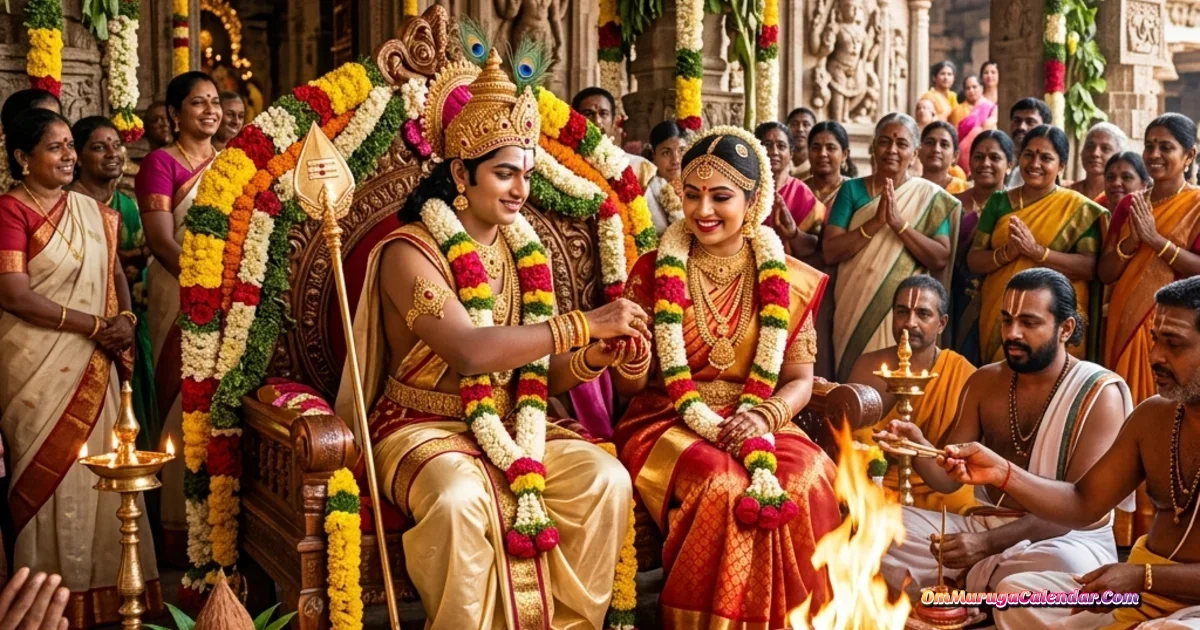
Panguni Uthiram is the auspicious confluence of the full moon and the Uthiram star in the Tamil month of Panguni. Known as the 'Festival of Divine Marriages', it celebrates the union of sacred energies.
Primary date & Panchangam
Times and tithi lines follow the site Panchangam engine for that civil day when data exists.
Spiritual Festival Sequence
Tamil Nadu Spiritual Experience
What is Panguni Uthiram?
Panguni Uthiram falls on the full moon day of the Tamil month Panguni, coinciding with the Uttara Phalguni (Uthiram) star. This day is incredibly significant as it is believed to be the wedding day of Lord Murugan and Deivanai, Lord Shiva and Goddess Parvati, and Lord Rama and Goddess Sita. It is a grand celebration of commitment and divine love.
Across Tamil Nadu, from the hilltop temples of Murugan to the ancient Shiva temples, the air is filled with chants and festivities. It is a day when the divine grace is said to be most accessible to those seeking harmony in their lives.
Spiritual Significance
This festival is primarily observed to remove obstacles in marriage and strengthen the bond between couples. Witnessing the 'Thirukalyanam' (divine wedding) ceremony at a temple is considered a great merit. It is also believed that on this day, Mahalakshmi emerged from the Milky Ocean, and Lord Ayyappa manifested on earth.
For devotees, this day represents the ideal of 'Grihastha Dharma' or the sacred path of family life. Acts of charity and selfless service performed on this day are believed to bring manifold blessings and spiritual growth.
Celebrations in Tamil Nadu
Panguni Uthiram is marked by 10-day long festivals in many temples, culminating in the grand chariot procession. Devotees often undertake long pilgrimages on foot (Padayatra) to major Murugan shrines, carrying 'Kavadi' as an act of penance and gratitude.
Special rituals like Abhishekam, Alankaram, and community feasts (Annadhanam) are common. The spirit of the festival is one of joy, surrender, and the celebration of the eternal union between the soul and the divine.