Daily Panchangam and Spiritual Insights
Language: தமிழ் | English
Pournami

Pournami

பௌர்ணமி

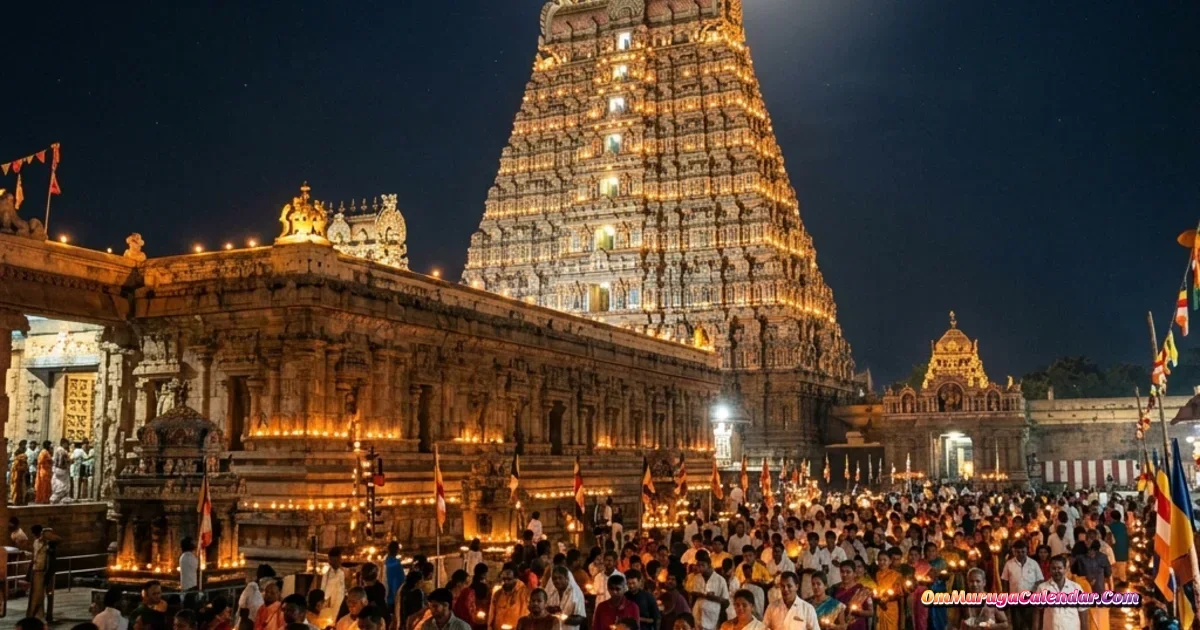
Pournami is the full moon day observed for worship, fasting, meditation, and temple visits. It holds massive significance for inner spiritual growth.

Pournami: 19 Jan 1981, 02.19 PM to 20 Jan 1981, 01.08 PM
16582 days ago 20-01-1981

Observance Dates & Timeline

Previous Pournami from today
14 days ago
31 May 2026 View day
Next Pournami from today
14 days to go
29 Jun 2026 View day

1981 Occurrences

Tue, 20 Jan 1981
Tuesday
1981
Raudri Thai 7
Pournami Starts: 19 Jan 1981, 02.19 PM | Ends: 20 Jan 1981, 01.08 PM
Shukla Paksha Pournami up to 01:08 PM IST Punarvasu - Pada 4 up to 07:23 AM IST
06:39
18:17
Wed, 18 Feb 1981
Wednesday
1981
Raudri Masi 6
Pournami Starts: 18 Feb 1981, 04.09 AM | Ends: 19 Feb 1981, 04.28 AM
Shukla Paksha Pournami up to 04:28 AM IST (next day) Ashlesha - Pada 3 up to 04:02 PM IST
06:36
18:26
Fri, 20 Mar 1981
Friday
1981
Raudri Panguni 7
Pournami Starts: 19 Mar 1981, 07.20 PM | Ends: 20 Mar 1981, 08.52 PM
Shukla Paksha Pournami up to 08:52 PM IST Uttara Phalguni - Pada 1 up to 04:05 AM IST (next day)
06:22
18:28
Sat, 18 Apr 1981
Saturday
1981
Dunmathi Chithirai 5
Pournami Starts: 18 Apr 1981, 11.14 AM | Ends: 19 Apr 1981, 01.28 PM
Shukla Paksha Chaturdashi up to 11:14 AM IST Hasta - Pada 3 up to 12:52 PM IST
06:06
18:28
Mon, 18 May 1981
Monday
1981
Dunmathi Vaikasi 4
Pournami Starts: 18 May 1981, 03.11 AM | Ends: 19 May 1981, 05.33 AM
Shukla Paksha Pournami up to 05:33 AM IST (next day) Vishakha - Pada 1 up to 03:31 AM IST (next day)
05:56
18:31
Wed, 17 Jun 1981
Wednesday
1981
Dunmathi Aani 3
Pournami Starts: 16 Jun 1981, 06.40 PM | Ends: 17 Jun 1981, 08.34 PM
Shukla Paksha Pournami up to 08:34 PM IST Jyeshtha - Pada 3 up to 03:11 PM IST
05:57
18:39
Thu, 16 Jul 1981
Thursday
1981
Dunmathi Aadi 1
Pournami Starts: 16 Jul 1981, 09.15 AM | Ends: 17 Jul 1981, 10.08 AM
Shukla Paksha Chaturdashi up to 09:15 AM IST Purva Ashadha - Pada 1 up to 02:03 AM IST (next day)
06:04
18:42
Sat, 15 Aug 1981
Saturday
1981
Dunmathi Aadi 31
Pournami Starts: 14 Aug 1981, 10.36 PM | Ends: 15 Aug 1981, 10.06 PM
Shukla Paksha Pournami up to 10:06 PM IST Shravana - Pada 4 up to 11:37 AM IST
06:08
18:35
Sun, 13 Sep 1981
Sunday
1981
Dunmathi Avani 28
Pournami Starts: 13 Sep 1981, 10.34 AM | Ends: 14 Sep 1981, 08.38 AM
Shukla Paksha Chaturdashi up to 10:34 AM IST Shatabhisha - Pada 2 up to 07:40 PM IST
06:07
18:19
Tue, 13 Oct 1981
Tuesday
1981
Dunmathi Purattasi 27
Pournami Starts: 12 Oct 1981, 09.26 PM | Ends: 13 Oct 1981, 06.19 PM
Shukla Paksha Pournami up to 06:19 PM IST Revati - Pada 1 up to 11:57 PM IST
06:05
18:01
Wed, 11 Nov 1981
Wednesday
1981
Dunmathi Aippasi 26
Pournami Starts: 11 Nov 1981, 07.43 AM | Ends: 11 Nov 1981, 11.59 PM
Shukla Paksha Chaturdashi up to 07:43 AM IST Ashwini - Pada 4 up to 08:14 AM IST
06:10
17:52
Fri, 11 Dec 1981
Friday
1981
Dunmathi Karthigai 26
Pournami Starts: 11 Dec 1981, 12.00 AM | Ends: 11 Dec 1981, 02.11 PM
Shukla Paksha Pournami up to 02:11 PM IST Rohini - Pada 4 up to 10:35 AM IST
06:23
17:57

Times and tithi lines follow the site Panchangam engine for that civil day when data exists.

Spiritual Festival Sequence

Tamil Nadu Spiritual Experience

What is Pournami?

Pournami refers to the spectacular Full Moon day in the traditional Hindu lunar calendar. It is universally considered one of the most highly auspicious and energetically potent days of the month. The complete, unblemished circular shape of the moon acts as a powerful metaphor for spiritual fullness, mental enlightenment, and the complete blossoming of human consciousness.

In the vibrant Tamil calendar, almost every Pournami is uniquely associated with a major temple festival or deity. For instance, Chitra Pournami, Vaikasi Visakam, Aadi Pournami, and Karthigai Deepam are profoundly important, marked by grand processions and heightened devotional activities across temples in South India.

The Science and Psychology behind the observance

The observance of Pournami goes far beyond religious rituals and has deep connections to human psychology and nature's cycles. Scientifically, the gravitational pull of the moon is at its absolute peak during Pournami, deeply affecting massive water bodies like oceans.

Since the human body is comprised of nearly 70% water, it is widely believed in yogic sciences that this strong gravitational pull heavily impacts the human mind, intensifying whatever emotions are already present. Observing a fast and engaging in deep meditation on this day channels this intense energy positively, ensuring mental balance and calming inner turbulence.

Pournami Vratam (Fasting) and Worship

Devotees observing the 'Pournami Vratam' (fast) wake up before dawn, bathe, and deeply immerse themselves in prayer. The fast usually involves abstaining from solid foods entirely throughout the day, surviving gracefully on water or milk. The fast is solemnly broken only after witnessing the majestic moonrise in the evening and offering heartfelt prayers to the divine.

Many households perform the 'Satyanarayana Pooja', a special worship dedicated to Lord Vishnu, seeking abundance, peace, and family harmony. Similarly, Goddess Amman temples glow with elaborate Kumkum arches and special flower decorations, drawing large crowds of devotees seeking Her maternal blessings.

The Sacred Practice of Girivalam

In Tamil Nadu, the word Pournami is almost synonymous with the sacred practice of 'Girivalam' at Thiruvannamalai. Hundreds of thousands of devotees undertake an arduous, barefoot 14-kilometer circumambulation around the sacred Mount Arunachala, which is revered as Lord Shiva himself in a geological form.

The spiritual reasoning behind Girivalam is profound. It is believed that the mountain is home to unseen Siddhas (enlightened sages). Walking around it, especially under the magnetic pull of the full moon, allows devotees to absorb the highly charged spiritual vibrations and medicinal herbal breeze, resulting in deep physical healing and spiritual elevation.

Internal Navigation

Related Festivals

Frequently Asked Questions

The heightened energy of the full moon makes the mind highly receptive. Meditating on this day yields deeper concentration and profoundly faster spiritual results.

It is the first full moon of the Tamil year, dedicated to Chitragupta, the divine accountant who records human karmas. It is a day to seek forgiveness and perform charity.

Abstain from solid, heavy, or non-vegetarian foods. Dedicate the mind to spiritual thoughts and break the fast only after seeing the moon and offering evening prayers.

Walking barefoot signifies supreme humility, surrender to the divine, and allows the body to directly absorb the earth's natural magnetic energies around the sacred hill.