Daily Panchangam and Spiritual Insights
Language: தமிழ் | English
Shasti

Shasti

சஷ்டி

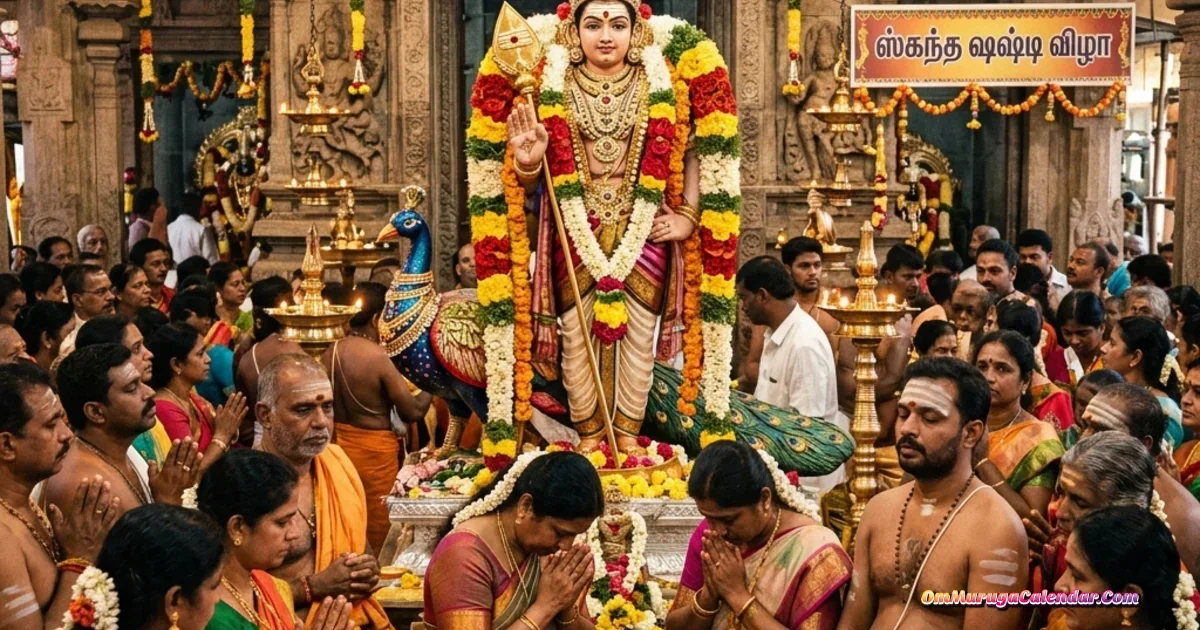
Shasti is the 6th lunar phase, profoundly dedicated to Lord Murugan. It is marked by rigorous fasting and the powerful chanting of Skanda Sashti Kavacham.

Shasti: 7 Jun 2000, 01.22 AM to 7 Jun 2000, 11.11 PM
9504 days ago 07-06-2000

Observance Dates & Timeline

Previous Shasti from today
23 days ago
22 May 2026 View day
Next Shasti from today
5 days to go
20 Jun 2026 View day

2000 Occurrences

Thu, 13 Jan 2000
Thursday
2000
Pramadi Margazhi 28
Shasti Starts: 12 Jan 2000, 07.52 AM | Ends: 13 Jan 2000, 08.01 AM
Shukla Paksha Shashthi up to 08:01 AM IST Uttara Bhadrapada - Pada 2 up to 07:32 PM IST
06:38
18:13
Fri, 11 Feb 2000
Friday
2000
Pramadi Thai 28
Shasti Starts: 10 Feb 2000, 08.08 PM | Ends: 11 Feb 2000, 07.07 PM
Shukla Paksha Shashthi up to 07:07 PM IST Ashwini - Pada 1 up to 12:29 AM IST (next day)
06:38
18:25
Sat, 11 Mar 2000
Saturday
2000
Pramadi Masi 28
Shasti Starts: 11 Mar 2000, 12.00 AM | Ends: 12 Mar 2000, 03.28 AM
Shukla Paksha Shashthi up to 03:28 AM IST (next day) Krittika - Pada 1 up to 03:51 AM IST (next day)
06:26
18:28
Mon, 10 Apr 2000
Monday
2000
Pramadi Panguni 28
Shasti Starts: 9 Apr 2000, 12.30 PM | Ends: 10 Apr 2000, 10.10 AM
Shukla Paksha Shashthi up to 10:10 AM IST Mrigashirsha - Pada 4 up to 06:38 AM IST
06:09
18:27
Tue, 09 May 2000
Tuesday
2000
Vikrama Chithirai 26
Shasti Starts: 8 May 2000, 06.49 PM | Ends: 9 May 2000, 04.24 PM
Shukla Paksha Shashthi up to 04:24 PM IST Punarvasu - Pada 4 up to 09:47 AM IST
05:57
18:30
Wed, 07 Jun 2000
Wednesday
2000
Vikrama Vaikasi 24
Shasti Starts: 7 Jun 2000, 01.22 AM | Ends: 7 Jun 2000, 11.11 PM
Shukla Paksha Shashthi up to 11:11 PM IST Ashlesha - Pada 3 up to 01:57 PM IST
05:55
18:36
Fri, 07 Jul 2000
Friday
2000
Vikrama Aani 23
Shasti Starts: 6 Jul 2000, 09.03 AM | Ends: 7 Jul 2000, 07.26 AM
Shukla Paksha Shashthi up to 07:26 AM IST Uttara Phalguni - Pada 2 up to 07:09 PM IST
06:02
18:42
Sat, 05 Aug 2000
Saturday
2000
Vikrama Aadi 21
Shasti Starts: 4 Aug 2000, 06.46 PM | Ends: 5 Aug 2000, 06.04 PM
Shukla Paksha Shashthi up to 06:04 PM IST Chitra - Pada 1 up to 03:32 AM IST (next day)
06:07
18:39
Mon, 04 Sep 2000
Monday
2000
Vikrama Avani 19
Shasti Starts: 3 Sep 2000, 07.19 AM | Ends: 4 Sep 2000, 07.48 AM
Shukla Paksha Shashthi up to 07:48 AM IST Vishakha - Pada 3 up to 02:12 PM IST
06:08
18:24
Tue, 03 Oct 2000
Tuesday
2000
Vikrama Purattasi 17
Shasti Starts: 2 Oct 2000, 11.16 PM | Ends: 4 Oct 2000, 12.58 AM
Shukla Paksha Shashthi up to 12:58 AM IST (next day) Jyeshtha - Pada 1 up to 02:55 AM IST (next day)
06:06
18:06
Thu, 02 Nov 2000
Thursday
2000
Vikrama Aippasi 17
Shasti Starts: 1 Nov 2000, 06.23 PM | Ends: 2 Nov 2000, 08.56 PM
Shukla Paksha Shashthi up to 08:56 PM IST Purva Ashadha - Pada 3 up to 04:54 PM IST
06:08
17:53
Sat, 02 Dec 2000
Saturday
2000
Vikrama Karthigai 17
Shasti Starts: 1 Dec 2000, 03.19 PM | Ends: 2 Dec 2000, 06.01 PM
Shukla Paksha Shashthi up to 06:01 PM IST Shravana - Pada 4 up to 06:58 AM IST
06:19
17:54

Times and tithi lines follow the site Panchangam engine for that civil day when data exists.

Spiritual Festival Sequence

Tamil Nadu Spiritual Experience

What is Shasti?

In the traditional Hindu lunar calendar, Shasti (also spelled Sashti) is the highly auspicious sixth day of both the waxing phase (Shukla Paksha) and the waning phase (Krishna Paksha) of the moon. This specific lunar day holds immense spiritual significance, primarily because it is entirely dedicated to the worship of Lord Murugan (also known as Skanda or Karthikeya), the Tamil God of War, Wisdom, and Victory.

According to astrology, Lord Murugan is the presiding deity of the fiery planet Mars (Chevvai). Praying to him on Shasti is strongly believed to infuse a devotee's mind with unparalleled courage, self-confidence, and the tactical wisdom needed to decisively overcome life's toughest obstacles and professional challenges.

The Legend of Soorasamharam

The absolute spiritual climax of Shasti worship culminates in the grand festival of 'Skanda Sashti', which occurs in the Tamil month of Aippasi (October–November). According to ancient Puranas, a powerful and arrogant demon named Soorapadman relentlessly tormented the celestial beings (Devas). In response, Lord Shiva created Lord Murugan specifically to destroy this evil.

After a fierce battle that lasted for exactly six days, Lord Murugan finally vanquished Soorapadman using his divine spear (Vel) on the day of Shasti. Instead of killing the demon, the Lord compassionately transformed him into a peacock (his mount) and a rooster (his flag). This epic battle beautifully symbolizes the ultimate victory of divine wisdom over the demonic forces of human ego, illusion, and negative karma.

The Power of Shasti Vratam (Fasting)

Observing a rigorous fast (Vratam) on Shasti days is a very common and deeply respected tradition, particularly in Tamil Nadu. There is a famous, centuries-old Tamil proverb stating that fasting on Shasti guarantees the blessing of a child in the womb for childless couples.

Devotees usually wake up before sunrise, take a purifying bath, and strictly abstain from eating any solid food throughout the day. Some choose to consume only a single meal of milk and fruits. The fast is ceremoniously broken only after visiting a Murugan temple in the evening, witnessing the 'Deeparadhana' (light offering), and receiving the Lord's sacred blessings.

Valarpirai vs Theipirai Shasti

Valarpirai Shasti: The waxing phase (Valarpirai) Shasti is the primary and most significant day for observing a fast dedicated to Lord Murugan. Devotees observe a monthly fast on this day seeking blessings for children, success in their ventures, and overall well-being. (The grand 'Kanda Shasti' Soorasamharam falls on the Valarpirai Shasti of the Aippasi month).

Theipirai Shasti: The waning phase Shasti is generally not observed as a major day for formal fasting or large-scale temple festivals.

Internal Navigation

Related Festivals

Frequently Asked Questions

Ancient spiritual belief holds that Lord Murugan's grace on Shasti specifically removes astrological and biological blockages related to fertility, blessing couples with healthy progeny.

After fasting the entire day, you should visit a temple, offer prayers, and break the fast in the evening by consuming the holy 'prasadam' or a very simple, sattvic vegetarian meal.

Monthly Shasti occurs twice every lunar month. Skanda Sashti is the grand annual 6-day fasting festival concluding with the epic 'Soorasamharam' in the month of Aippasi.

While highly recommended and beneficial, if one cannot visit a temple, lighting a lamp before a picture of Lord Murugan at home and chanting the Kavacham is equally powerful.