The Spiritual Secrets and Significance of the Temple Flagstaff (Kodimaram)
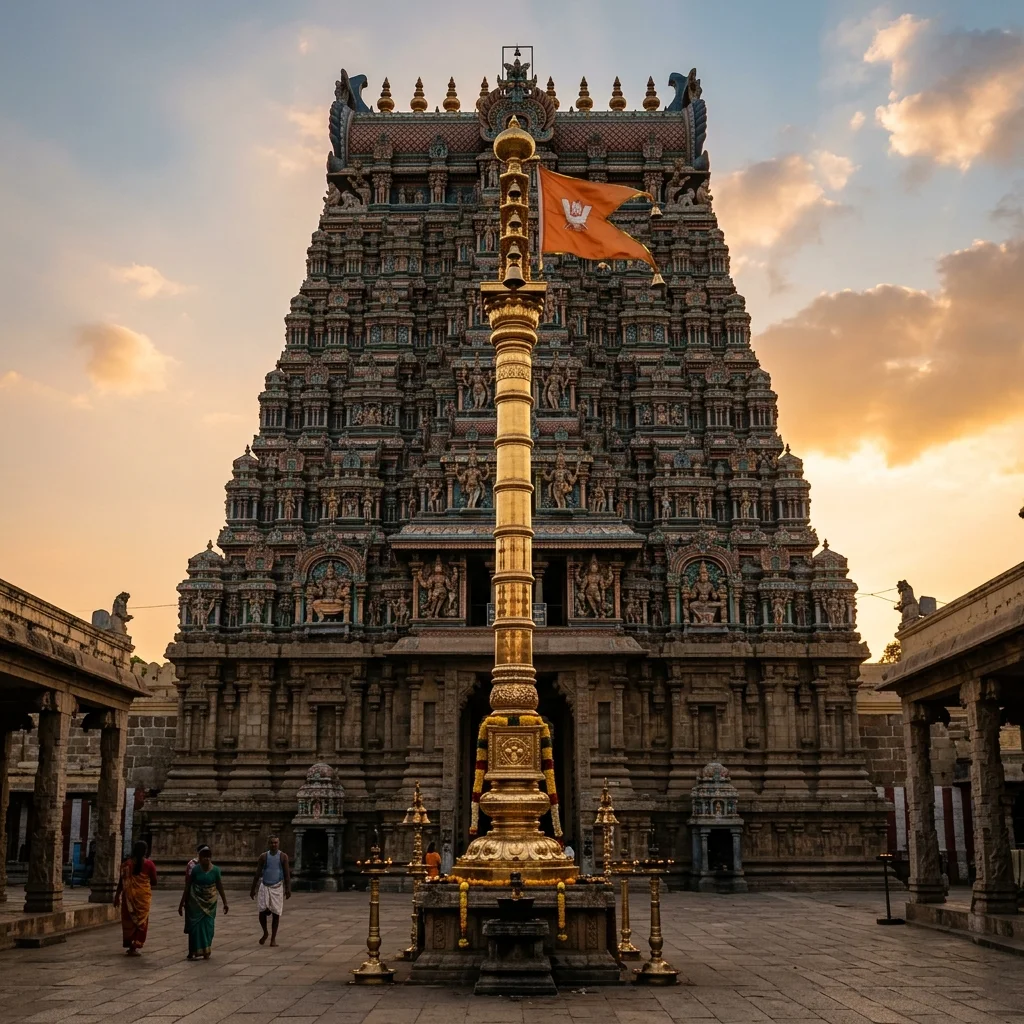
Spiritual Symbolism and the Connection to Human Body
In Hindu temple architecture, the flagstaff or Kodimaram (Dhwajasthambha) is not just a structural element; it is deeply symbolic of the human anatomy and spiritual path. The flagstaff represents the human spinal cord (Merudhandam), which channels the vital life force (Prana) from the root chakra (Muladhara) at the base to the crown chakra (Sahasrara) at the top of the head. Correspondingly, the flagstaff receives and directs cosmic energy throughout the temple complex. According to sacred scriptures (Agamas), the Kodimaram consists of three parts: the square base representing Lord Brahma (Brahma bhaga), the octagonal middle section representing Lord Vishnu (Vishnu bhaga), and the cylindrical top shaft representing Lord Shiva (Rudra bhaga). Thus, it embodies the unified power of the holy trinity.
The Science of Energy Reception and Transmission
From a scientific perspective, the temple flagstaff acts as a highly efficient antenna receiving electromagnetic and cosmic waves from the atmosphere. The three rings at the top of the flagstaff symbolize the three cosmic forces: Iccha Shakti (willpower), Kriya Shakti (action), and Jnana Shakti (wisdom). The copper or gold plating on the wooden post not only acts as a lightning arrester protecting the temple structure but also stores and channels positive cosmic energy into the inner sanctum. During festivals, the hoisting of the temple flag (Dhwajarohanam) represents the downward flow of this spiritual energy, radiating divine vibrations all around the premises. When combined with the sacred vibrations created when we ring the temple bell, it helps to rejuvenate and heal the human nervous system.
Correct Methods and Benefits of Worshipping the Kodimaram
Upon entering a temple, the Kodimaram is the first structure that a devotee must worship. One must prostrate fully on the ground in front of the flagstaff and the sacrificial altar (Balipeetham). It is traditionally forbidden to prostrate in the space between the Balipeetham and the inner sanctum. Men should perform 'Shashtanga Namaskaram' (eight parts of the body touching the ground), while women perform 'Panchanga Namaskaram' (five parts of the body touching the ground). Prostrating near the base of the flagstaff, where cosmic energy is highly concentrated, helps to ground negative charges from the body and absorb positive spiritual vibrations. It is also an important rule that a devotee's shadow or physical body should never fall on the shadow of the flagstaff.
The Philosophical Teaching of the Altar and the Flagstaff
The Balipeetham (altar) situated in front of the Kodimaram teaches a profound philosophical lesson: before entering the presence of the deity, one must sacrifice their animalistic traits such as lust (Kama), anger (Krodha), greed (Lobha), pride (Mada), and jealousy (Matsarya). Once these negative egos are surrendered at the altar, the Kodimaram teaches us to raise our consciousness and thoughts upward towards the divine, just as the flag is hoisted to the top of the pillar. Understanding these hidden secrets and following the traditional temple darshan rules while worshipping the Kodimaram ensures that we receive the complete blessings of the deity along with mental peace and clarity.