The Spiritual Secrets and Meaning of Temple Festivals
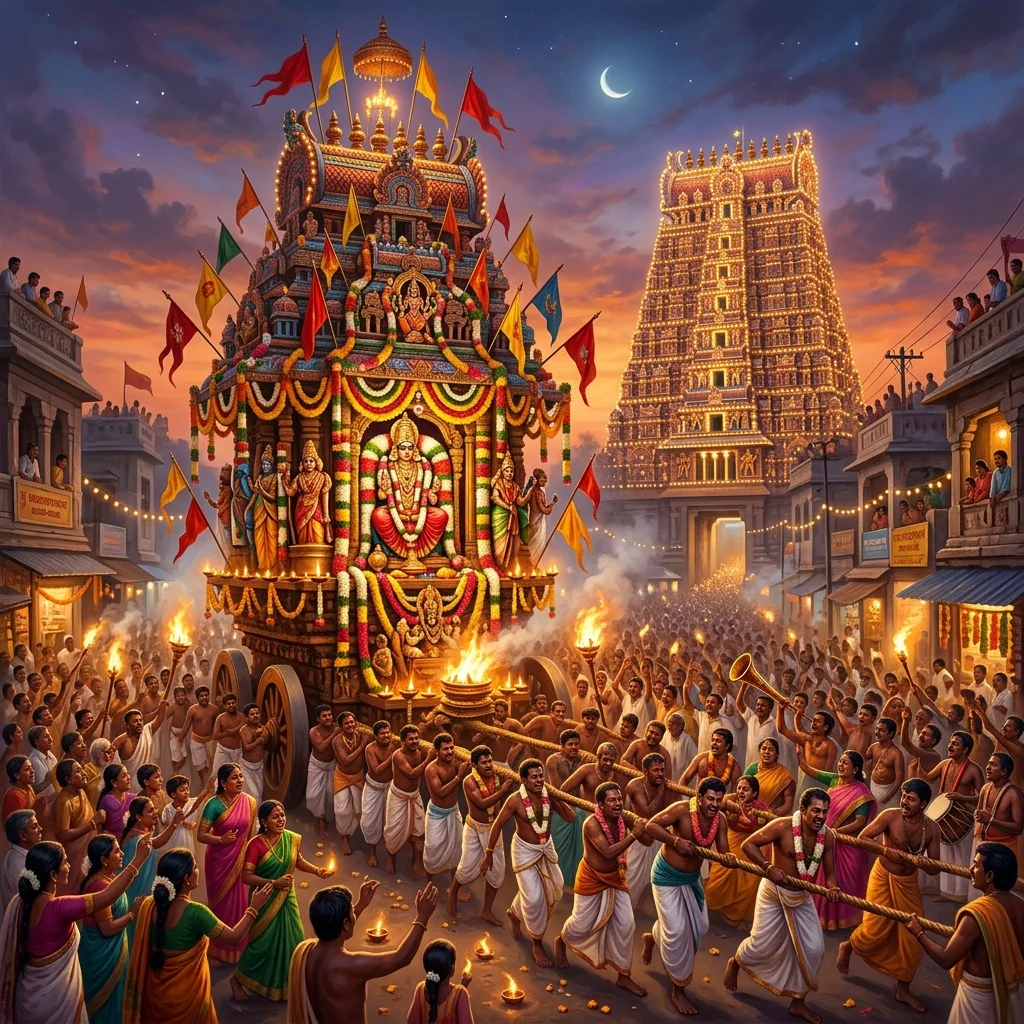
Temple Festivals: The Spiritual Journey of the Soul
In Hindu tradition, temples are not mere places of brick and stone; they are vibrant repositories of cosmic energy. The festivals celebrated in these holy shrines, known as Brahmotsavam or Utsavam, are not just social gatherings but profound spiritual events designed to purify the collective consciousness of the community and elevate the individual soul (Jivatma) towards union with the divine (Paramatma). Every ritual performed during a temple festival carries deep mystical, psychological, and scientific significance. Worshipping during these times infuses our lives with positive energy and helps clear our mental slate. While our Spiritual Articles section discusses various spiritual practices, the temple festival stands as the ultimate collective ritual to align the human construct with cosmic rhythms.
Hoisting of the Flag: Awakening of the Kundalini
The commencement of a temple festival is marked by the sacred ritual of flag hoisting (Dhwajarohanam). Symbolically, the flagstaff or Kodimaram represents the human spinal cord (Merudhandam), which houses the central energy channel (Sushumna Nadi). Hoisting the flag represents raising our consciousness from lower material desires to higher spiritual realms. The Darbha grass and the flag hoisted at the peak act as natural conductors of cosmic energy, channelling positive waves into the sanctum sanctorum. To read more about the architecture and secrets of the flagstaff, visit our article on Temple Flagstaff Secrets. The Vedic chants and instrumental music played during Dhwajarohanam create powerful sound vibrations that awaken the dormant energy of the temple deity and diffuse it throughout the environment.
The Spiritual Vows of Kaapu Kattu
Before the festival begins, priests and devotees tie a sacred yellow thread mixed with turmeric, known as Kaapu or Kanganam, around their wrists. Tying the Kaapu represents taking a solemn vow to dedicate one's thoughts, words, and deeds entirely to the divine for the duration of the festival. Devotees observe strict discipline, maintaining purity of mind and body, and avoiding travel outside the village. Astrologically and psychologically, this helps center the mind, preventing energy from scattering and focusing it on spiritual growth. It teaches the importance of self-restraint and discipline in leading a balanced life.
Vahana Sevas: Taming the Animalistic Egos
During the festival, the deity is taken in procession on different vehicles or Vahans, such as the Lion, Bull, Peacock, Elephant, and Horse. Worshipping the deity on these vehicles has a deep psychological and spiritual meaning. Each animal represents a specific trait of the human ego. The Lion represents pride and aggression; the Bull represents anger and stubbornness; the Horse represents wild desires. When the deity sits atop these animals, it signifies that the divine has subdued these animalistic instincts. It delivers a message to the devotee: "Surrender your wild impulses to me, and I will transform them into vehicles of grace." For instance, worshipping Shiva on the Nandi (Bull) vehicle helps a devotee cultivate patience and absolute devotion, which is also commemorated during twilight prayers described in our Pradosham page.
The Chariot Run (Therottam): Body as a Chariot
The grandest event of any temple festival is the Chariot Run (Therottam). The Upanishads explain this through a beautiful analogy: the human body is the chariot, the intellect is the charioteer, the mind is the reins, and the five senses are the horses. The deity inside the chariot represents the soul (Atma). Pulling the chariot represents steering our life's journey under the guidance of the divine intellect. The festival also shows the infinite compassion of the deity, who emerges from the inner sanctum to bless those who are unable to enter the temple due to age or illness. When thousands of devotees pull the heavy ropes together, transcending all social divisions of caste, wealth, and status, it creates immense collective positive energy and demonstrates the power of unity and equality.
Theerthavari: Purification of the Elements
The festival culminates with the holy bath of the deity, known as Theerthavari, in the temple tank or sacred river. During this ritual, the deity's energy, which has been intensified through days of continuous prayers and rituals, is transferred to the water. Devotees then take a dip in this holy water to wash away their sins, purify their physical body, and calm their minds. The sound of bells, shell trumpets, and drums played during Theerthavari creates acoustic frequencies that harmonize our chakras, a phenomenon detailed in our article on Temple Bell Significance. Worshipping during festivals like Vaikunta Ekadasi or other major festivals helps align our individual elements with the cosmic order.
Spiritual Awakening through Festivity
The festival concludes with the lowering of the flag (Dhwajavarohanam), returning the energy to the deity. Participating in temple festivals cleanses our senses, reduces mental stress, and brings peace. For detailed astrological timings of these festivals and auspicious planetary hours, refer to our Daily Panchangam guide. Beyond the outer celebration of lights, music, and decorations, temple festivals serve as a bridge to inner awakening, helping us transition from the mundane to the spiritual, and experience the presence of the divine within ourselves.